5 Signs Your Fascia Board Has Wood Rot (and Why Waiting Makes It Worse)
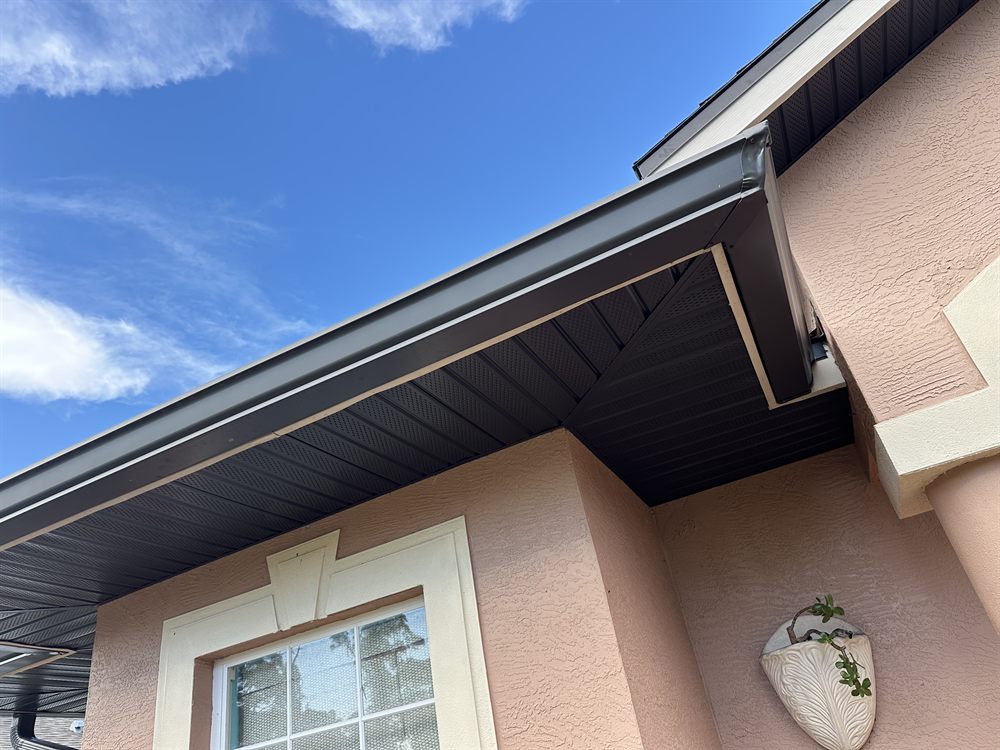
The five most reliable signs of fascia wood rot are peeling or bubbling paint, dark stains or discoloration, wood that looks soft or crumbly at the edges, gutters that sag or pull away, and pest activity along the roofline. You can spot all five from the ground with no ladder. If you see even one, the rot underneath is almost always more advanced than what's visible. Fascia rot spreads inward before it shows outward.
Your fascia is the long board running along the edge of your roof, right behind the gutters. It seals the roof edge, carries the gutter system, and protects the rafter ends behind it. When it rots, everything attached to it and behind it is next in line. Here's what to look for.
Sign 1: Peeling, Bubbling, or Cracking Paint
Paint failure is usually the first visible symptom. When moisture gets inside a fascia board, it pushes outward as the wood swells, and the paint film loses its grip. It bubbles first, then peels away in strips.
Check from the ground: Scan the full length of each fascia run in morning or late-afternoon light, when shadows make texture easier to see. Isolated bubbles or a patch of peeling on an otherwise sound-looking board is the tell. Don't just repaint over it. Paint over wet wood traps the moisture and accelerates the rot.
Sign 2: Dark Stains or Discoloration
Healthy painted fascia is a uniform color. Rot shows up as gray, brown, or black patches, often starting at board ends, joints, or directly below a gutter seam that drips.
Check from the ground: Look at the spots where two fascia boards meet and anywhere a gutter section joins or ends. Streaking that runs down from behind the gutter means water is getting between the gutter and the board, the classic setup for rot you can't see yet.
Sign 3: Soft, Crumbly, or Deformed Wood
Rotted wood loses its structure. From the ground this shows up as edges that look ragged or "fuzzy," corners that have crumbled off, or a board with a visible wave or bow in what should be a dead-straight line.
Check from the ground: Sight down the length of the fascia like you're checking a piece of lumber. Any dip, bulge, or wavy section means the board has taken on water. If you can safely reach a low section (a porch overhang, for example), press it with a screwdriver or key. Sound wood resists; rot gives like cork.
Sign 4: Gutters Sagging or Pulling Away
Your gutters are only as strong as the wood they're screwed into. When fascia rots, gutter hangers lose their bite, and the gutter starts to sag, tilt outward, or separate from the roofline entirely.
Check from the ground: Look for gutter sections that dip between hangers, visible gaps between the gutter back and the fascia, or screws that have clearly backed out. A sagging gutter is often the symptom, not the problem. Replacing the gutter without addressing the rotted board behind it just moves the failure a season down the road.
Sign 5: Pest Activity Along the Roofline
Carpenter ants, termites, wasps, and birds all target softened wood. Damp, rotting fascia is an open invitation.
Check from the ground: Watch the roofline for a few minutes on a warm day. Steady insect traffic in and out of one spot, small round holes, sawdust-like material (frass) on the ground below, or birds repeatedly landing at the same point on the fascia all point to wood soft enough to nest in.
Why Florida Homes Rot Faster
Tampa Bay is close to a worst-case environment for exterior wood. Three factors stack up:
- Humidity that never quits. Wood needs to dry out between wettings to stay sound. In our climate, exterior wood can stay above the moisture threshold where rot fungi thrive for months at a time.
- Rain volume and rain angle. Summer storms don't fall straight down. They drive rain sideways into the roof edge, behind gutters, and up under drip edges. Fascia takes the hit from directions it was never really designed for.
- Ventilation problems. Blocked soffit vents trap hot, humid air in the attic, and that moisture condenses against the back side of the fascia, so the board rots from behind while the painted face still looks fine. This is why fascia often fails "suddenly": the visible side was the last part to go.
A board that might last 20 years in a dry climate can fail in a fraction of that time here, which is why waiting on early signs costs so much more in Florida than elsewhere.
Repair or Full Replacement? An Honest Answer
Not every rotted fascia needs full replacement, and anyone who says otherwise before looking at your specific roofline is guessing. Here's how we actually make the call:
Repair makes sense when:
- Rot is limited to one or two sections, typically at board ends or below a gutter leak
- The rafter ends and sub-fascia behind the board are still sound
- The root cause (a gutter seam leak, a blocked vent) is identified and fixed at the same time
Full replacement makes sense when:
- Rot appears at multiple points along the same run. That pattern means moisture is systemic, not local
- The screwdriver test finds softness in areas that still look painted and fine
- Rafter tails behind the fascia show damage, since patching the face board over compromised framing just hides the problem
- The boards are old enough that repaired sections would fail before the rest of the run anyway
Repairing three sections this year and four more next year usually costs more than replacing the run once. But replacing a whole run when one board end needs work is money wasted. The honest answer depends on what's behind the board, and that's only knowable with eyes on it, which is exactly what a free inspection is for. If the rot has spread into soffit panels or roof-edge framing, we'll tell you that too; see our wood rot repair and soffit repair pages for how those connect.
What Fascia Work Typically Costs
As a general range, spot repairs of a rotted fascia section often run in the low-to-mid hundreds of dollars, while replacing longer runs (especially with gutter removal and reinstallation involved) can run from several hundred to a few thousand depending on length, material, height, and what's found behind the board. Treat these as ballpark orientation only: your final quote depends on your home's specific situation, and you'll have a written estimate within one business day of your inspection.
Don't Let a $300 Problem Become a $3,000 One
Rot never stops on its own. Every rainy season it spreads: from the fascia into the sub-fascia, from the sub-fascia into rafter ends, and along the roofline into the soffit. Gutters attached to rotted wood eventually come down, and if that happens during a storm, you're looking at storm damage repair and gutter services on top of the original fascia repair.
Vexiva One serves Tampa, Brandon, Riverview, Wesley Chapel, St. Petersburg, Clearwater, and Lakeland with our own crew, no subcontractors. The inspection is free, the estimate is written and delivered within one business day, and we'll give you a straight repair-vs-replace answer either way.
Call (813) 545-0392 or email contact@vexivaone.com to schedule your free fascia inspection.
FAQs
Can I just paint over rotted fascia board?
No. Paint seals moisture inside the board, which speeds up the rot instead of stopping it. The damaged wood needs to be repaired or replaced first, and the moisture source (usually a gutter leak or ventilation problem) fixed at the same time. Then paint becomes protection instead of a cover-up.
How long does it take for fascia to rot in Florida?
Faster than almost anywhere else in the country. Between year-round humidity, driving summer rain, and attic moisture, unprotected or poorly ventilated fascia in Tampa Bay can develop rot within a few years, while the same board in a dry climate might last decades. Regular inspection matters more here than in most of the U.S.
Do I need to replace my gutters when I replace rotted fascia?
Not always. Gutters usually have to come off so the fascia can be replaced, and if they're in good shape they can be reinstalled on the new board. If the gutters themselves are damaged, sagging, or leaking at the seams (often the original cause of the rot), replacing them at the same time avoids paying for removal and reinstallation twice.
Spotted one of these signs?
Get a straight repair-vs-replace answer. Free inspection, written estimate within one business day.