Is Your Roofline Ready for Hurricane Season? A Pre-Storm Checklist for Tampa Bay Homes
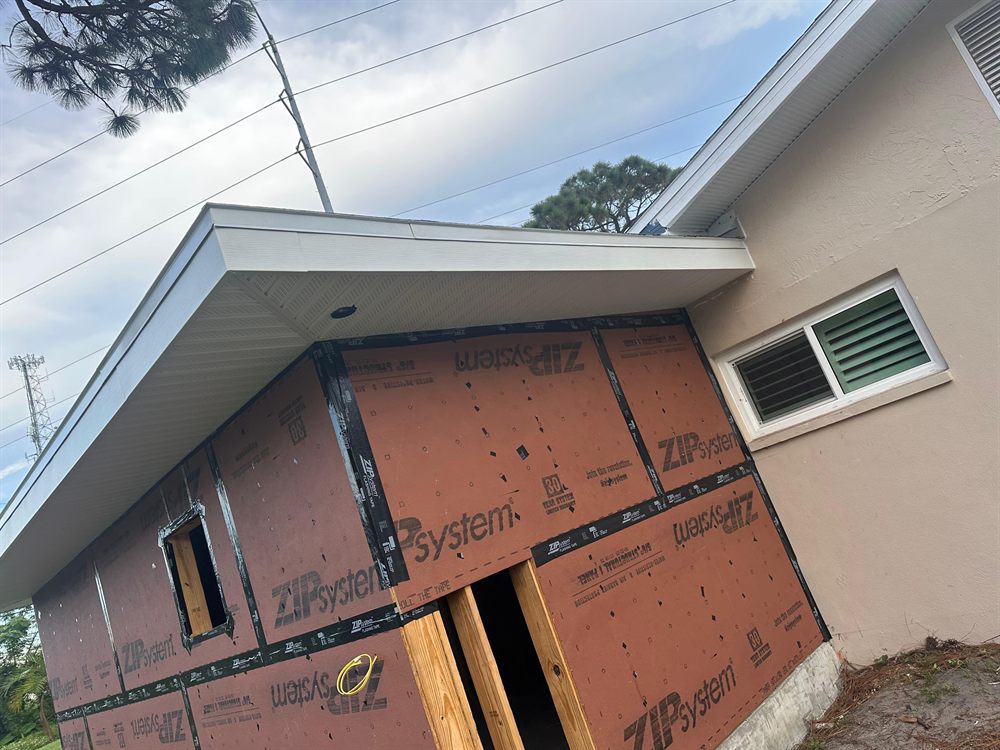
To get your roofline ready for hurricane season in Tampa Bay, check five things before June 1: secure soffit panels, tight fascia boards, clear gutters and downspouts, no active wood rot, and no gaps where wind can get under the roof edge. Most of this you can inspect yourself from the ground in under 30 minutes. Anything loose, sagging, or soft needs a professional look before the first named storm, not after.
Hurricane season in Florida runs June 1 through November 30, and the roofline is where most wind-driven damage starts. It isn't the shingles. It's the edges. When wind gets under a loose soffit panel or behind a lifted fascia board, it pressurizes the attic and pries the roof edge open from the inside. Here's what to check, in order.
The Pre-Storm Roofline Checklist
1. Soffit panels: push test and vent check
Walk the perimeter of your house and look up at the soffit, the paneling on the underside of your roof overhang. You're looking for:
- Panels that sag, rattle, or have visibly shifted out of their channels
- Gaps between panels or at the wall line, where even a half-inch gap is a wind entry point
- Vented sections that are crushed, painted shut, or clogged with debris or insect nests
Soffit vents matter twice in a storm. Blocked vents trap attic heat and moisture year-round, which weakens the wood around them. Loose vented panels are worse: in hurricane winds, they're the first thing to blow out, and once wind enters the attic, uplift pressure on the roof deck multiplies.
If you can wiggle a panel by hand with light pressure, it will not survive 90 mph gusts. That's a job for soffit repair before the season starts, not a tube of caulk.
2. Fascia boards: look for lift, stains, and separation
The fascia is the vertical board running along your roof edge, and it's what your gutters attach to. From the ground, scan for:
- Boards pulling away from the rafter ends (you'll see a shadow line or visible gap)
- Dark streaks or peeling paint, which usually means water is getting behind the board
- Nail heads backing out in a row
A loose fascia board is a lever. Wind grabs the gutter, the gutter yanks the fascia, and the fascia takes a section of roof edge with it. If any board moves, flexes, or sounds hollow when tapped with a broom handle, schedule fascia repair now. It's a small fix in May and a big one in September.
3. Gutters and downspouts: flow, fasteners, and discharge
A Tampa Bay hurricane can drop 10+ inches of rain in a day. Your gutters either move that water away from the house or dump it against your fascia and foundation. Check:
- Clear the runs. Leaves, shingle grit, and oak pollen mats block flow exactly when you need it most.
- Test the fasteners. Grab a gutter section and pull gently. If it flexes more than slightly or the hangers shift, it needs re-securing. Loose gutters become airborne debris in high wind.
- Follow every downspout to the ground. Water should discharge at least a few feet from the foundation, not pool at the wall.
- Check the slope. Standing water after a normal rain means the run is pitched wrong and will overflow in a storm.
If your gutters overflow in ordinary summer thunderstorms, they will fail in a hurricane. Our gutter services team can re-pitch, re-secure, or replace runs before the season peaks.
4. Wood rot: the damage multiplier
This is the one most homeowners skip, and it's the one that turns a minor storm into an insurance claim. Rotted wood has a fraction of the holding strength of sound wood. A fascia board with hidden rot won't hold gutter hangers under load. A rotted sub-fascia won't hold the drip edge. Soft framing around a soffit lets the whole panel section peel away.
From the ground, look for bubbling paint, dark patches, or a fuzzy/spongy texture on any exposed wood. If you can safely reach a suspect spot, press it with a screwdriver. Sound wood resists; rotted wood gives. Any softness means the rot goes deeper than what you can see, and it's worth a professional wood rot repair assessment before wind tests it for you.
5. Know when to call a professional
Call before the storm if you find any of these:
- Soffit or fascia that moves under hand pressure
- Wood that's soft, stained, or actively flaking
- Gutters pulling away from the house
- Gaps at the roof edge where you can see daylight into the overhang
- Anything you'd need to climb a ladder to evaluate, because roofline work from a ladder is where homeowners get hurt
A pre-season inspection is fast, and fixing a loose panel in May costs a fraction of rebuilding a roof edge in October.
What Storm Damage Looks Like Afterward
If a storm does come through, walk the property once it's safe and look for:
- Missing or hanging soffit panels, often on the corner of the house facing the wind
- Fascia boards cracked, bowed, or gone entirely, sometimes with the gutter still attached and lying in the yard
- Gutters detached, crushed, or twisted
- Water stains on interior ceilings near exterior walls, a sign wind-driven rain entered through the roofline
- Debris punctures in soffit or fascia from flying branches
Even if the roof itself looks fine, roofline damage lets water into the attic every rain after that. Our storm damage repair page covers what to prioritize.
Document Everything Before and After
Take photos of your roofline now, while it's in good condition: every side of the house, plus close-ups of gutters, soffit, and fascia. Date-stamped "before" photos make any future insurance claim far easier to support. After a storm, photograph all damage before any cleanup or temporary repairs, and keep receipts for anything you spend. We can't handle your claim for you, but a clear written repair estimate with photos gives you solid documentation to submit.
Get Ahead of the Season
Vexiva One serves Tampa, Brandon, Riverview, Wesley Chapel, St. Petersburg, Clearwater, and Lakeland with our own crew. We don't subcontract the work. The inspection is free, you'll have a written estimate within one business day, and we'll tell you honestly what needs repair and what can wait.
Call (813) 545-0392 or email contact@vexivaone.com to schedule your free pre-storm roofline inspection.
FAQs
When should I prepare my roofline for hurricane season in Florida?
Before June 1, when hurricane season officially starts. Aim for April or May. Contractors book up fast once the first storm is named, and repairs like loose fascia or rotted soffit framing take time to schedule. The season runs through November 30, so a mid-season check after any major storm is smart too.
Can loose soffit really cause my roof to fail in a hurricane?
Yes. Soffit blowout is one of the most common failure points in Florida wind events. When a soffit panel fails, wind enters the attic and pressurizes it from below while the storm creates suction above. That combined uplift is what peels roof decking. Securing soffit panels is one of the highest-value storm preparations you can make.
Should I empty my gutters before a hurricane?
Yes. Clogged gutters overflow directly onto fascia boards and the foundation during heavy rain, and the added water weight can rip loose gutters off the house entirely. Clear the runs, confirm downspouts discharge away from the foundation, and check that every hanger is tight before the storm.
Free pre-storm roofline inspection
We'll tell you honestly what needs repair and what can wait. Written estimate within one business day.